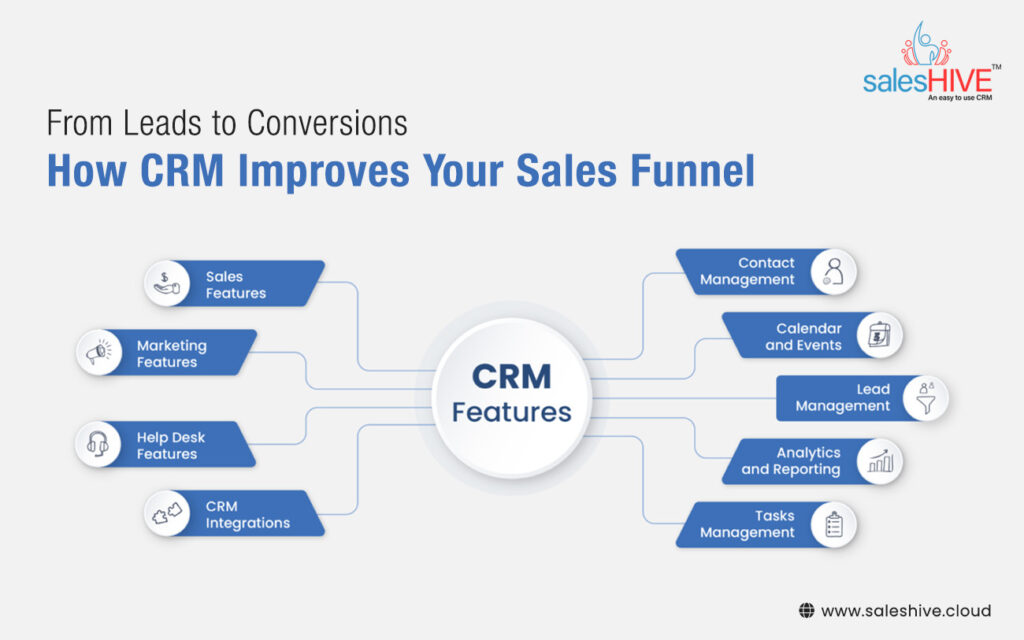
In today’s competitive market, generating leads is only half the battle. The real challenge lies in turning those leads into paying customers. This is where a Customer Relationship Management (CRM) system becomes a powerful asset. A well-implemented CRM doesn’t just store contact information—it transforms the way your entire sales funnel operates, making it more efficient, organized and conversion-focused.
Let’s explore how CRM can take your sales funnel from scattered efforts to a streamlined, high-performing system that consistently drives results.
Understanding the Sales Funnel
Before diving into CRM benefits, it’s important to understand the structure of a typical sales funnel. It usually consists of the following stages:
- Awareness – Potential customers discover your brand
- Interest – They show curiosity about your product or service
- Consideration – They evaluate your offering
- Decision – They choose whether to buy
- Action – They complete the purchase
Without proper management, leads can easily drop off at any stage. A CRM system ensures that no opportunity is missed and every lead is nurtured effectively.
Centralized Lead Management
One of the biggest advantages of using a CRM is having all your lead data in one place. Instead of juggling spreadsheets, emails and notes, everything is stored in a centralized dashboard.
This allows your team to:
- Track every interaction with a lead
- Access real-time data instantly
- Avoid duplicate or lost information
With better organization, your team spends less time searching for data and more time engaging with prospects.
Improved Lead Tracking and Segmentation
Not all leads are the same. Some are ready to buy, while others need more nurturing. A CRM helps you categorize and segment leads based on:
- Behavior
- Demographics
- Engagement level
- Purchase intent
This segmentation allows you to send targeted messages instead of generic communication. As a result, your chances of conversion increase significantly because your messaging becomes more relevant.
Automation That Saves Time and Boosts Efficiency
Manual tasks can slow down your sales process. CRM systems automate repetitive actions such as:
- Follow-up emails
- Lead assignment
- Task reminders
- Data entry
Automation ensures that no lead is forgotten and every prospect receives timely communication. It also frees up your sales team to focus on what truly matters—building relationships and closing deals.
Better Communication and Follow-Ups
Consistent communication is key to converting leads. A CRM helps you maintain a structured follow-up system, ensuring that every lead is contacted at the right time.
For example:
- You can set reminders for follow-ups
- Track previous conversations
- Personalize future interactions
This creates a smoother and more professional experience for your prospects, increasing trust and improving conversion rates.
Enhanced Sales Team Collaboration
In many businesses, poor communication between team members leads to missed opportunities. A CRM improves collaboration by providing a shared platform where everyone can:
- View lead status
- Add notes and updates
- Track progress in real-time
This transparency ensures that all team members are aligned and working towards the same goal—closing the deal.
Data-Driven Decision Making
A CRM doesn’t just store data—it turns it into valuable insights. You can analyze:
- Which leads convert the most
- Where prospects drop off in the funnel
- Which campaigns perform best
These insights help you refine your strategies and focus on what works. Instead of guessing, you make informed decisions that directly impact your sales performance.
Personalization at Scale
Today’s customers expect personalized experiences. A CRM allows you to tailor your communication based on each lead’s behavior and preferences.
For instance:
- Sending customized emails
- Recommending relevant products or services
- Addressing specific pain points
This level of personalization makes your brand more relatable and increases the likelihood of conversion.
Shorter Sales Cycles
When your sales process is organized and automated, deals close faster. A CRM helps you:
- Identify high-quality leads quickly
- Prioritize prospects ready to buy
- Eliminate unnecessary delays
By focusing on the right leads at the right time, you reduce your sales cycle and increase overall efficiency.
Improved Customer Retention
A CRM doesn’t stop working after the sale is made. It continues to support your business by helping you maintain strong relationships with existing customers.
You can:
- Track customer history
- Offer timely support
- Identify upselling and cross-selling opportunities
Satisfied customers are more likely to return and recommend your business, creating long-term value.
Scalability for Growing Businesses
As your business grows, managing leads manually becomes nearly impossible. A CRM system scales with your business, allowing you to handle more leads without compromising efficiency.
Whether you have 100 leads or 10,000, a CRM ensures that your sales funnel remains structured and effective.
Common Mistakes CRM Helps You Avoid
Without a CRM, businesses often struggle with:
- Lost or forgotten leads
- Inconsistent follow-ups
- Poor data organization
- Lack of visibility into sales performance
A CRM eliminates these issues by providing a clear, structured system that keeps everything on track.
Turning leads into conversions requires more than just effort—it requires strategy, organization and consistency. A CRM system acts as the backbone of your sales funnel, ensuring that every lead is managed, nurtured and guided toward a purchase.
From centralized data and automation to personalized communication and actionable insights, CRM transforms the way businesses approach sales. It not only improves efficiency but also enhances the overall customer experience, leading to higher conversion rates and long-term growth.
If your goal is to build a sales funnel that consistently delivers results, adopting a CRM is no longer optional—it’s essential.
FAQs
1. What is a CRM sales funnel?
A CRM sales funnel is a structured process that helps businesses manage leads through every stage of the customer journey, from awareness and enquiry to conversion and customer retention.
2. How does a CRM improve the sales funnel?
A CRM centralizes customer information, tracks every interaction, automates follow-ups, and provides real-time pipeline visibility, helping businesses convert more leads into customers.
3. How does SalesHive CRM help with lead management?
SalesHive CRM captures leads from multiple sources, organizes them in one dashboard, assigns them to sales representatives, and tracks every interaction throughout the sales process.
4. Can SalesHive CRM automate follow-ups?
Yes. SalesHive CRM automates follow-up reminders, task assignments, lead routing, and notifications, ensuring every prospect receives timely communication.
5. How does CRM help increase lead conversions?
CRM improves conversions by segmenting leads, enabling personalized communication, automating repetitive tasks, and ensuring no lead is forgotten during the sales process.
6. Does SalesHive CRM help shorten the sales cycle?
Yes. SalesHive CRM helps sales teams identify high-intent prospects, prioritize opportunities, automate workflows, and eliminate delays, allowing deals to close faster.
7. Is SalesHive CRM suitable for startups and growing businesses?
Absolutely. SalesHive CRM is built for startups, SMEs, and growing businesses that need an affordable, cloud-based CRM to organize leads, streamline sales processes, and scale efficiently.
8. Why should businesses use SalesHive CRM to manage their sales funnel?
SalesHive CRM combines lead management, automation, sales pipeline tracking, reporting, and customer insights in one platform, helping businesses improve efficiency, increase conversions, and build long-term customer relationships.