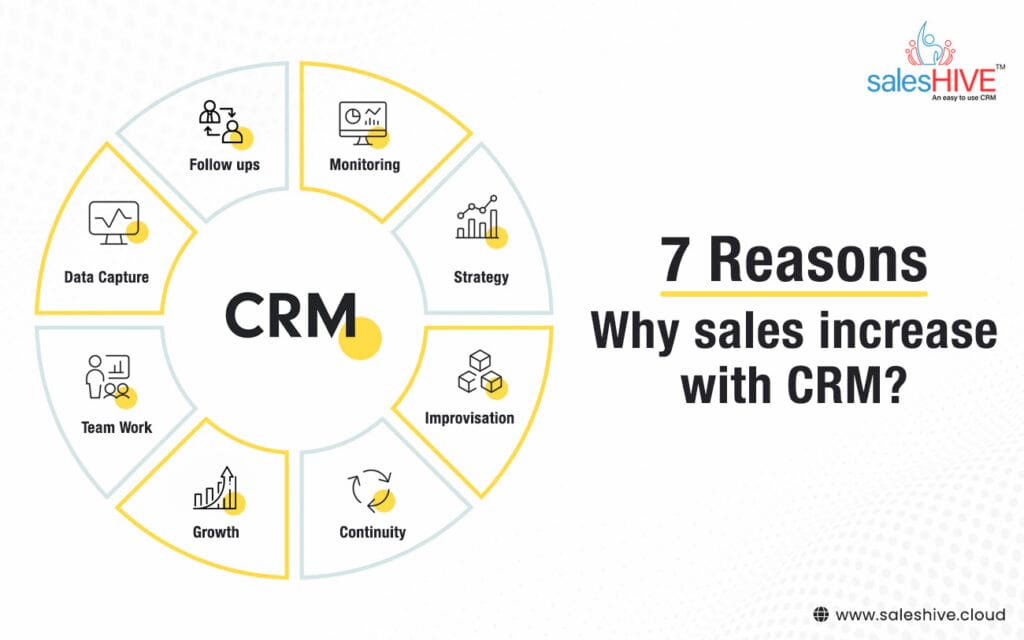
CRM has evolved as the best asset any Sales setup could ask for. It works for both the Management and the team members. Team members who fill their CRM data regularly end up closing more sales, have less leakages and close deals faster.
For sales team members, CRM ensures that every lead and client interaction is recorded and monitored. Team members who regularly update their CRM systems can quickly access key details about their prospects, prioritize their follow-ups, and track the sales pipeline effectively. This leads to faster decision-making, quicker responses and ultimately, more closed deals.
From a management perspective, CRM offers valuable insights into team performance, sales trends and customer behavior. It helps managers to allocate resources more effectively, identify areas for improvement and measure the success of sales strategies. Additionally, CRM systems often come with automation features, reducing manual work and ensuring that nothing slips through the cracks.
- All leads are well recorded, so there is no missing out on opportunities. The leads may be coming in from different sources. Unless there is a centralized system for recording them, there will always remain some risk of loosing out on some of them. Once into the CRM, the lead will get proper attention. Also, leads can be meticulously allocated in the CRM after seeing who can best handle a particular lead. Since a 360° view of the system is available, the lead allocation can be done in a balanced manner ensuring optimisation of workload distribution among team members.
- The actions taken on leads get recorded so it is easy to plan the next steps required to increase the possibility of conversion. Based on discussions with the customer, upselling, cross selling, discounting or offering of Add ons and followup strategy can be better planned to ensure the final goal ie. conversion.
- Alerts can be set up to ensure timely follow ups are done. This ensures constant engagement with the prospect and helps build a rapport.
- In the event of a team member not being able to work due to any personal reasons, the management can ensure that the leads handled by him do not suffer. The leads can be allocated to peers and they would know all case details recorded in the CRM. This ensures smooth transition and enables continuity of efforts being made towards deal closure.
- Monitoring by the Management becomes much easier. Since all the leads and progress made is available in the system. Management is able to get a bird’s eye view of the entire operation. They can generate detailed reports and analyze the areas of improvement. Non performing team players can be identified and a lot of analysis can be done from the data regarding the areas in which they may need to improve. Management can accordingly conduct trainings and work on improving team performance, eventually resulting in higher conversions.
- Clearer Sales pipeline. The Management is always in the know of what kind of revenue to expect, how many closures to expect and they can decide on hiring plans, expansion plans product launches and work on all business strategies accordingly.
- Data driven decisions. The decisions get driven by real time data and not on assumptions alone.
In today’s fast-paced business world, CRM is no longer just a tool—it’s a game-changer for sales teams, making them more productive, efficient, and successful.
Also Read: Revolutionizing CRM for Small Businesses: Introducing SalesHive.cloud
FAQs
1. How does a CRM increase sales?
A CRM increases sales by organizing customer data, tracking leads, automating follow-ups, and helping sales teams focus on high-potential opportunities, resulting in higher conversion rates.
2. Why is lead management important for increasing sales?
Effective lead management ensures every inquiry is captured, assigned, and followed up on promptly, reducing missed opportunities and improving the chances of closing more deals.
3. Can CRM automate follow-ups with prospects?
Yes. SalesHive CRM automates reminders, follow-up tasks, and notifications, ensuring your sales team stays connected with prospects at the right time.
4. How does CRM improve customer relationships?
A CRM stores every customer interaction in one place, giving sales teams a complete view of each customer and enabling personalized communication and better service.
5. Does CRM help sales teams become more productive?
Yes. By automating repetitive tasks, centralizing information, and simplifying sales workflows, CRM allows sales representatives to spend more time selling and less time on administrative work.
6. Can CRM improve sales forecasting?
Yes. CRM provides real-time pipeline visibility, reports, and analytics that help businesses forecast revenue, identify bottlenecks, and make informed sales decisions.
7. Is SalesHive CRM suitable for small businesses?
Absolutely. SalesHive CRM is built for startups and SMEs, offering an affordable, cloud-based solution with features that help businesses streamline sales and grow efficiently.
8. Why should businesses invest in a CRM instead of spreadsheets?
Unlike spreadsheets, a CRM centralizes customer information, automates sales processes, improves collaboration, tracks every interaction, and provides valuable insights that help increase sales and customer retention.