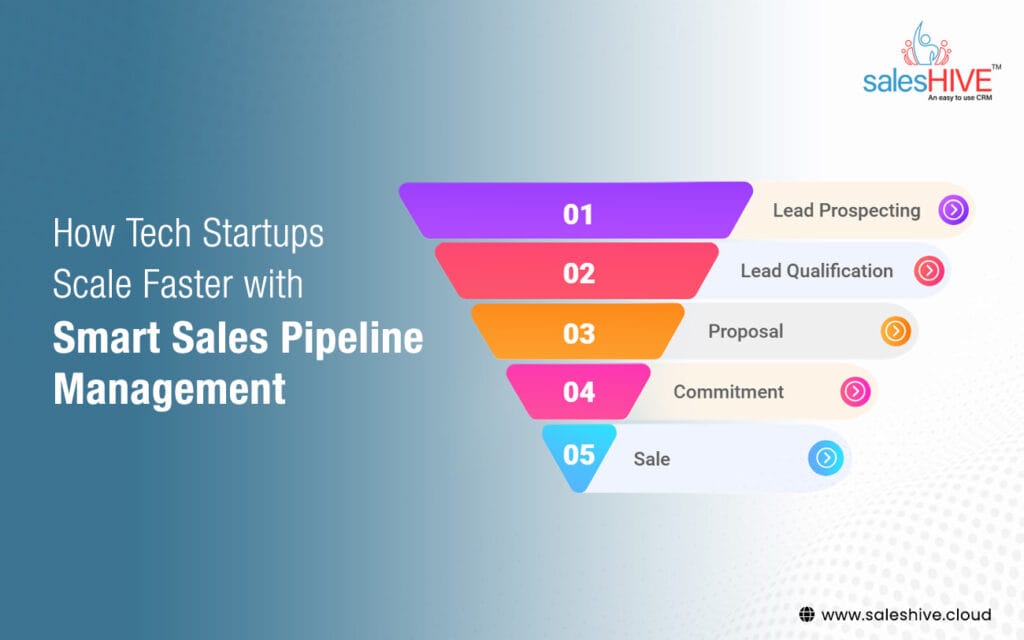
In today’s fast-moving business world, tech startups face a big challenge — how to grow quickly without losing control of their sales process. For many young companies, growth often feels like a race against time. Investors demand results, competition is fierce, and customer expectations keep rising. So, how do successful startups manage to scale faster while keeping everything in check?
The answer often lies in smart sales pipeline management. With the right structure in place, startups can track leads, identify opportunities, and close deals more efficiently. And when combined with sales CRM software, this strategy becomes a growth engine that fuels long-term success.
What Is Sales Pipeline Management?
At its core, sales pipeline management is the process of organizing and tracking every potential deal your business is working on. Think of it as a visual roadmap that shows where each lead stands in the journey — from initial contact to becoming a paying customer.
For startups, this is more than just a fancy chart. It’s about:
- Clarity: Knowing exactly how many deals are in progress.
- Prioritization: Identifying which leads deserve the most attention.
- Forecasting: Predicting future revenue with confidence.
- Efficiency: Reducing wasted time on unqualified leads.
When a startup manages its sales pipeline effectively, every member of the team has a clear picture of what’s happening. This transparency allows the company to grow faster without creating chaos.
Why Startups Struggle Without Proper Sales Pipeline Management
Startups often begin with high energy and enthusiasm. But as the number of leads grows, things quickly become complicated. Without proper sales pipeline management, several issues arise:
- Leads fall through the cracks – Without structure, some potential customers are forgotten.
- Unclear priorities – Sales teams may waste time chasing low-value prospects instead of focusing on high-potential ones.
- Missed revenue goals – Without accurate forecasting, it’s hard to set or achieve realistic sales targets.
- Poor collaboration – Teams struggle when they don’t have a shared view of the pipeline.
In short, failing to manage the sales pipeline properly slows down growth and creates confusion — the exact opposite of what a startup needs.
How Sales CRM Software Boosts Pipeline Management
This is where sales CRM software comes in. CRM, short for Customer Relationship Management, is a powerful tool that helps startups organize their leads, automate tasks, and analyze sales performance.
Here’s how it helps startups scale faster:
- Centralized Data: All customer information stays in one place, accessible to everyone.
- Automated Follow-Ups: Reminders ensure no lead is ignored.
- Detailed Insights: Track which sales strategies work and which don’t.
- Seamless Communication: Sales teams stay aligned and collaborate better.
- Forecasting Accuracy: CRM analytics provide a clear picture of future revenue.
For a startup, adopting sales CRM software isn’t just a choice — it’s a competitive advantage. It eliminates guesswork and empowers teams to focus on closing deals, not juggling spreadsheets.
Benefits of Smart Sales Pipeline Management for Startups
Let’s break down the real advantages that startups gain when they take pipeline management seriously:
1. Faster Decision-Making
With clear visibility into the pipeline, startup leaders can make quick, informed decisions about where to allocate resources.
2. Increased Conversion Rates
By focusing on the right leads at the right time, startups can convert more prospects into paying customers.
3. Improved Customer Relationships
Consistent follow-ups and personalized engagement — powered by a sales CRM — make customers feel valued.
4. Scalable Growth
As the startup expands, the pipeline grows with it. Structured management ensures growth is sustainable, not chaotic.
5. Better Team Alignment
Everyone from marketing to sales has access to the same data, reducing miscommunication and boosting collaboration.
Best Practices for Tech Startups
If you’re a tech startup aiming to scale, here are some proven best practices for sales pipeline management:
- Define Clear Stages – Break down the pipeline into specific steps like “Prospect,” “Qualified Lead,” “Demo,” and “Closed.”
- Qualify Leads Early – Not every lead is worth chasing. Use clear criteria to focus on the best opportunities.
- Track Key Metrics – Monitor conversion rates, average deal size, and sales cycle length.
- Automate Where Possible – Let your sales CRM software handle routine tasks like follow-ups.
- Review Regularly – Hold weekly pipeline reviews to identify roadblocks and opportunities.
These habits ensure that your sales pipeline is not just a tool, but a growth engine.
Real-World Example: From Startup to Scale-Up
Imagine a tech startup offering SaaS solutions for small businesses. Initially, the founders managed sales through email and spreadsheets. As leads increased, they struggled with missed follow-ups, duplicate contacts, and poor forecasting.
Once they adopted a sales CRM software and set up structured sales pipeline management, things changed dramatically. The team could:
- Automatically track all customer interactions.
- Focus on high-value deals instead of wasting time.
- Predict revenue accurately, which attracted new investors.
- Close deals 30% faster than before.
This shift turned them from a struggling startup into a fast-scaling business.
The Future of Sales Pipeline Management for Startups
As technology evolves, so does the way startups manage their pipelines. AI-powered sales CRM systems are becoming more common, offering predictive analytics, smart lead scoring, and even automated customer communication.
For startups, this means even greater efficiency and faster scaling. The combination of human-driven strategy and technology-driven insights is the key to staying ahead of the competition.
Conclusion
For tech startups, growth isn’t just about ambition — it’s about execution. And the secret weapon behind rapid scaling is smart sales pipeline management. By adopting structured processes and leveraging the power of sales CRM software, startups can avoid common pitfalls, build stronger customer relationships, and accelerate revenue growth.
In a world where speed and efficiency define success, managing your pipeline wisely can make the difference between a startup that struggles and one that thrives.
Also Read: Sales Automation Tools for Tech Firms: Simplifying Long Sales Cycles
FAQs
1. What is sales pipeline management for tech startups?
Sales pipeline management is the process of tracking potential customers through every stage of the sales journey, from the first enquiry to closing the deal. It helps tech startups organize leads and build a predictable sales process.
2. Why is sales pipeline management important for tech startups?
A well-managed sales pipeline helps startups prioritize high-value opportunities, reduce missed follow-ups, improve forecasting, and increase conversion rates while scaling their business.
3. How does SalesHive CRM help tech startups scale?
SalesHive CRM centralizes lead management, automates follow-ups, tracks customer interactions, and provides real-time pipeline visibility so startups can grow without losing sales opportunities.
4. Can SalesHive CRM automate follow-ups?
Yes. SalesHive CRM automatically schedules reminders, tasks, and notifications, ensuring every prospect receives timely follow-ups throughout the sales cycle.
5. How does SalesHive CRM improve lead tracking?
SalesHive CRM captures leads from multiple sources, assigns them to the right sales representatives, records every interaction, and tracks progress through customizable sales pipeline stages.
6. Does SalesHive CRM provide sales reports and forecasting?
Yes. SalesHive CRM offers dashboards, pipeline reports, conversion tracking, and sales forecasting to help startup founders make informed business decisions and identify growth opportunities.
7. Is SalesHive CRM suitable for early-stage SaaS and technology startups?
Absolutely. SalesHive CRM is designed for startups, SaaS companies, IT service providers, and growing technology businesses that need an affordable, cloud-based CRM to manage and scale their sales operations.
8. Why should startups use SalesHive CRM instead of spreadsheets?
Unlike spreadsheets, SalesHive CRM centralizes customer data, automates workflows, improves collaboration, tracks every sales opportunity, and provides actionable insights that help startups scale efficiently and close more deals.